
Monitoring Your Internal Weather Map
Storm Systems, Human Nature, and the Atmosphere We Carry

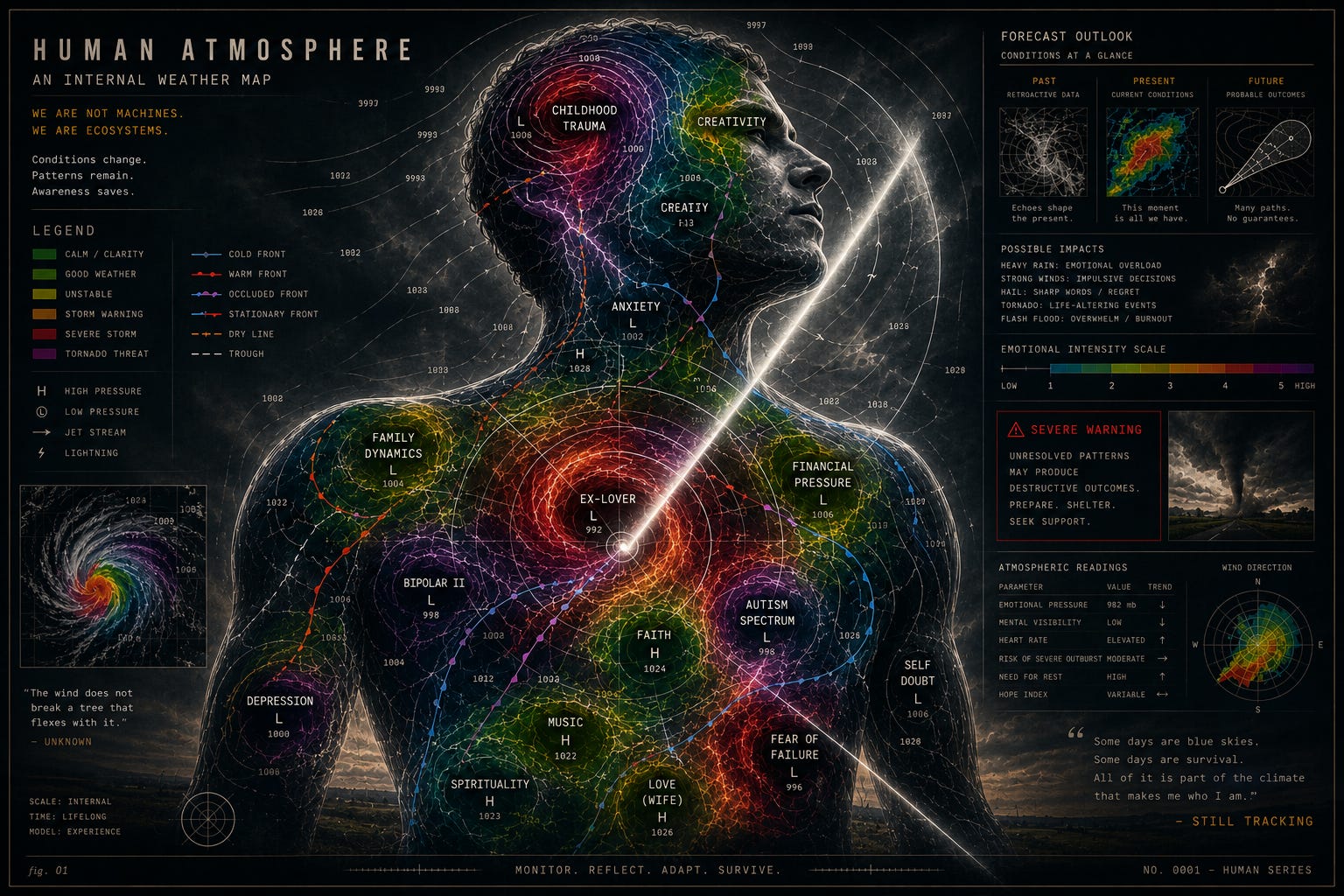
There is something strangely hypnotic about watching a storm form hundreds of miles away on a glowing radar map at two in the morning. I have followed meteorology and storm systems for several years now. I track weather models through apps like WeatherWise, tune into storm chaser livestreams, and watch pressure systems evolve across the country like living organisms searching for shape. Part of the fascination comes from the raw physical power of it all. Tornadoes twist across open land with almost mythological force. Thunderheads rise like mountains. Wind turns invisible motion into destruction you can feel in your chest. Yet the deeper intrigue comes from something else entirely: the relationship between prediction and uncertainty.
Weather forecasting lives in a world between knowledge and mystery. Meteorologists can’t promise the future with absolute certainty. They study patterns, pressure changes, atmospheric instability, moisture levels, historical behavior, and shifting fronts. They look for conditions that suggest what could happen next. A tornado warning does not emerge from nowhere. The atmosphere begins speaking long before the funnel touches the ground. The signs gather slowly. Pressure drops. Rotation develops. Temperatures shift. Energy builds invisibly until the radar suddenly reveals what was already forming beneath the surface.
That understanding started pulling me toward a different philosophical question entirely. I began wondering why weather fascinated me so deeply in the first place. Somewhere between watching Doppler radar loops and hearing storm chasers calmly narrate incoming danger, I realized meteorology mirrors something profoundly human. Our lives carry patterns too. Emotional pressure systems form over years. Childhood experiences linger like dormant climate conditions. Relationships leave atmospheric residue behind them. Grief alters visibility. Mental illness shifts internal barometric pressure. Family history, heartbreak, fear, trauma, love, exhaustion, faith, isolation, hope — all of it circulates through us like weather fronts moving across an unstable sky.
Human beings often treat emotional collapse or destructive decisions as isolated events. In reality, most storms announce themselves long before impact. Certain moods arrive with familiar warning signs. Certain relationships carry emotional humidity from the very beginning. Certain seasons of life create instability that increases the possibility of emotional tornadoes forming inside us. Awareness changes survival. A weather forecast can save lives before disaster strikes, and emotional awareness can do something similar. Being prepared might mean finding shelter or holding off on a decision, and it starts with recognizing when your inner atmosphere is already charged enough to spark lightning.
The future always retains mystery. No radar system predicts every storm perfectly. Human beings remain even more complicated than weather patterns. Both meteorology and self-awareness share the same core idea: conditions are crucial, and patterns reveal important insights. What’s hidden will eventually come to light, and wisdom often starts by noticing the sky before the sirens begin to wail.
Watching the Radar
I sometimes leave weather maps running in the background the same way other people leave music or television on. There is a strange comfort in watching systems evolve in real time. Storm chasers drive directly into danger with a kind of calm focus that almost feels monastic. They study cloud structures, road grids, wind direction, and atmospheric rotation while the horizon darkens around them like a scene from a Denis Villeneuve film. Their voices rarely sound panicked. They sound attentive.
That fascinates me.
Weather culture attracts a certain type of personality. Some people feel drawn toward the unknown edges of things. Horror fans. Metalheads. Philosophers. Disaster junkies. People who stare into storms with curiosity rather than immediate retreat. Ancient cultures climbed mountains to watch lightning storms and interpreted thunder as divine language. Modern culture opens livestreams and radar apps instead. The instinct remains the same. Human beings want to witness forces larger than themselves.
A tornado embodies something terrifying and honest at the same time. It exposes how quickly certainty can collapse. A bright afternoon transforms into catastrophe within minutes. Entire towns disappear beneath rotating wind. The atmosphere reminds humanity that control has always been partial. Civilization simply wraps structure around chaos and hopes the walls hold.
I think many people feel this instinctively now. Modern life runs on the illusion of control. Algorithms try to predict our actions, phones keep tabs on where we go, and schedules run our lives. But it only takes one storm—whether from the sky or the heart—to show just how fragile it all really is.
Pressure Systems
Meteorologists study atmospheric conditions before severe weather develops. Human beings often ignore emotional conditions until damage already exists.
People say someone “snapped” as though emotional destruction appeared spontaneously. Storms don’t usually appear out of thin air. Pressure systems take time to form, instability creeps in bit by bit, and heat quietly builds until the sky finally gives way.
Human beings work similarly.
Childhood neglect shapes emotional climates for decades. Religious fear lingers inside the nervous system long after belief systems shift. Financial anxiety changes how people think, sleep, and relate to others. Isolation rewires perception. Trauma distorts emotional forecasting. Bipolar disorder, depression, grief, neurodivergence, addiction, shame, exhaustion — each one alters internal atmospheric conditions.
Most people only notice the tornado touchdown.
They see the angry outburst
They see the divorce
They see the addiction
They see the breakdown
They see the self-destruction
Few people study the invisible systems that formed it.
That reality reshaped the way I think about human behavior. Emotional weather follows its own patterns. Some environments stir up instability more easily than others. Some relationships bring on the same storms again and again. Some memories sit like dormant supercells, just waiting for the right conditions to ignite.
The atmosphere and patterns always share its story before the moment of impact.
Climate Versus Weather
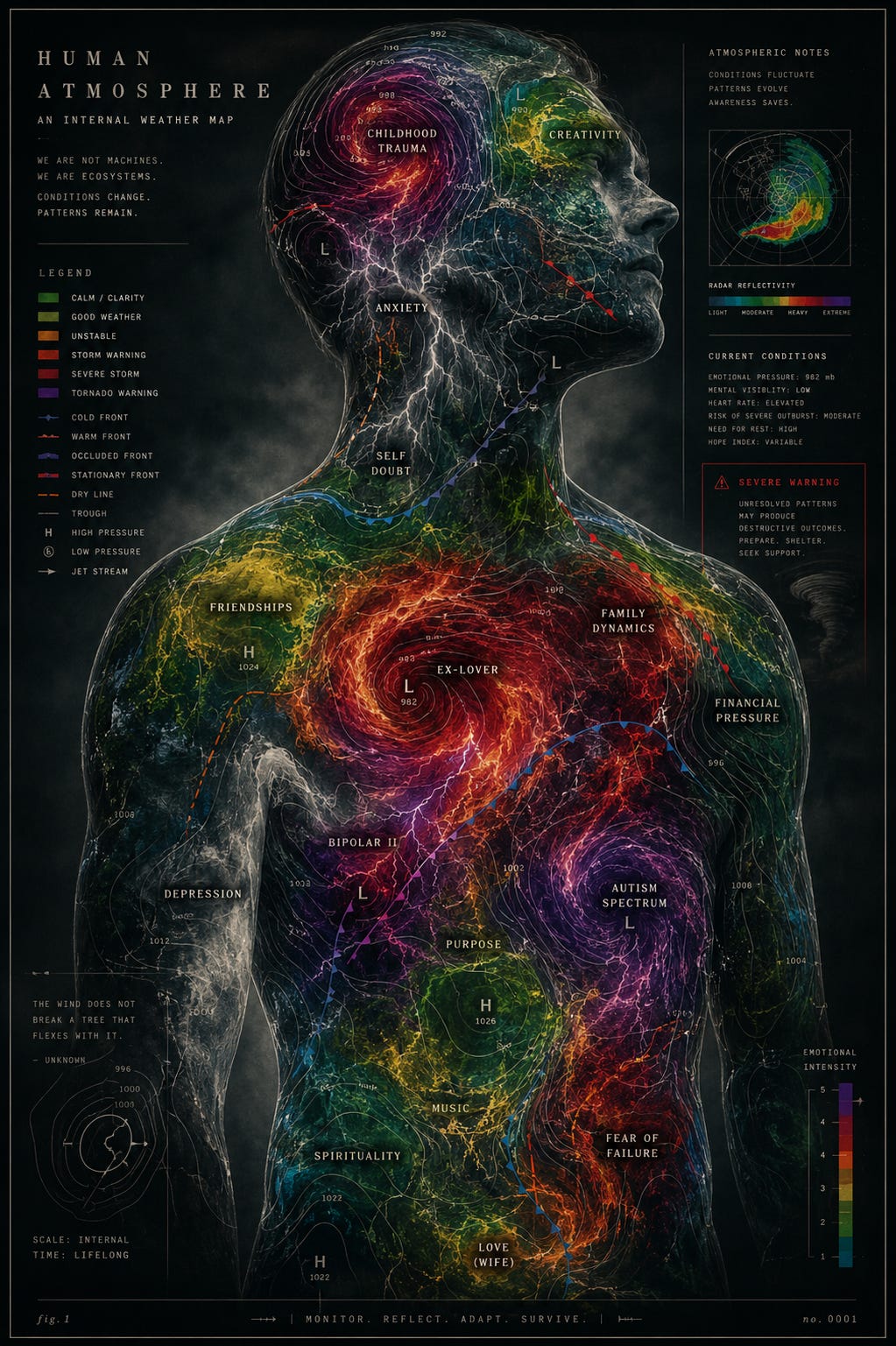
One of the key distinctions in meteorology is between weather and climate. Weather shifts rapidly, while climate forms lasting patterns. In a way, people carry both within them.
A person can experience emotional storms while still possessing an overall hopeful emotional climate. Another person can smile constantly while living inside an emotional winter that stretches across decades.
This distinction is important because modern culture increasingly confuses temporary emotional weather with permanent identity. A rough week starts to define you. A bout of depression feels like fate. A hard season shapes how you see the world.
Real life moves with more complexity than that.
Some families generate climates of unpredictability where children learn to monitor emotional tension the way storm chasers monitor radar signatures. Some households produce emotional droughts where affection rarely appears. Others create climates of fear, criticism, instability, or silence. These environments shape people long after they leave them.
Generational trauma behaves almost exactly like inherited climate systems. Patterns repeat across decades until someone consciously interrupts them. Rage travels through bloodlines. Addiction lingers through generations. Emotional avoidance quietly repeats itself, and the cycle continues until someone changes the balance.
That idea also holds significant theological meaning.
Ancient spiritual traditions often described humanity through agricultural and atmospheric imagery because weather functions as one of the clearest metaphors for unseen influence. Wind drifts unseen, yet it shapes the land. Shifts in pressure go unnoticed, yet they decide when storms will come. People aren’t so different, as hidden experiences quietly shape the lives everyone can see.
Storm Chasers
I have often wondered why so many people feel drawn toward storms, horror films, apocalyptic imagery, true crime documentaries, and extreme music. Entire subcultures orbit catastrophe with almost spiritual fascination.
I think part of the answer lives in emotional recognition.
People sometimes chase externally what they already carry internally.
A person raised within emotional instability may feel strangely calm watching tornado footage because chaos already feels familiar. A horror fan may connect deeply with dread because dread already exists beneath the surface of daily life. Extreme music often resonates with people carrying emotional intensity that ordinary culture struggles to articulate.
Watching weather systems doesn’t necessarily feel entertaining to me. It feels reflective. Radar maps mirror emotional landscapes, while rotating systems echo unresolved memory patterns. Storm chasers braving unstable skies are like people trying to navigate thoughtfully through emotional turmoil.
Even the language overlaps.
Mental pressure
Emotional flooding
Coldness
Dark clouds
Tension in the air
Explosive anger
Calm before the storm
Human beings already describe themselves meteorologically because instinctively we understand that emotions behave atmospherically.
The Radar We Ignore
Modern culture often rewards productivity, struggle and suffering while punishing awareness. People ignore emotional warning signs because stopping feels dangerous. Exhaustion starts to feel normal. Burnout turns into something we put on display and anxiety fades into the constant hum of the background.
Yet radar exists for a reason.
Meteorologists don’t study storms thinking they can end severe weather for good. They do it because understanding storms helps people stay prepared and, in extreme situations like tornadoes, can save lives.
Humans have their own emotional radar, sensing subtle cues that something isn’t quite right.
Recurring insomnia
Constant irritability
Isolation
Obsessive thinking
Emotional numbness
Creative paralysis
These signs reveal atmospheric conditions.
Sometimes emotional wisdom means recognizing when shelter matters more than momentum. Wisdom is knowing when to hold off on a conversation until your inner storms have calmed. Sometimes it’s recognizing that your emotions are already turbulent enough to cloud your judgment.
Self-awareness doesn’t stop the storms, but it does help you weather them.
The Beauty of Storms
Storms carry destruction. Storms also carry transformation.
Dead heat breaks through violent rain. Forests regenerate after fire. Droughts end through turbulence. Lightning terrifies humanity while simultaneously illuminating entire skies.
Some emotional storms reshape identity in necessary ways.
Grief can make us more compassionate, failure can strip away illusions, loss can reveal what truly matters, and suffering can help us grow beyond surface-level certainty.
The Book of Job reaches its emotional climax through a whirlwind because storms expose humanity to scale. Wind and thunder collapse ego quickly. The atmosphere reminds people they exist inside something vast, ancient, and uncontrollable.
Modern culture spends enormous energy trying to engineer certainty. Weather continues reminding humanity that mystery remains undefeated.
Perhaps that explains part of the fascination too.
Watching storms form on radar late at night feels strangely existential. Those shifting colors and rotating systems mirror something deeply human. We pass through seasons, taking on pressure and weathering impacts. We pick ourselves up after setbacks, carrying the climates passed down from generations before while working to create new forecasts for what lies ahead.
And somewhere beneath it all, the atmosphere keeps whispering long before the sirens start.
I was thinking earlier that you probably like the storm broadcasts because they help you feel more prepared or like you have a better understanding of unpredictable things.